Return to homepage
Read next case study

Finotive Funding: Trader Dashboard & Risk Tooling

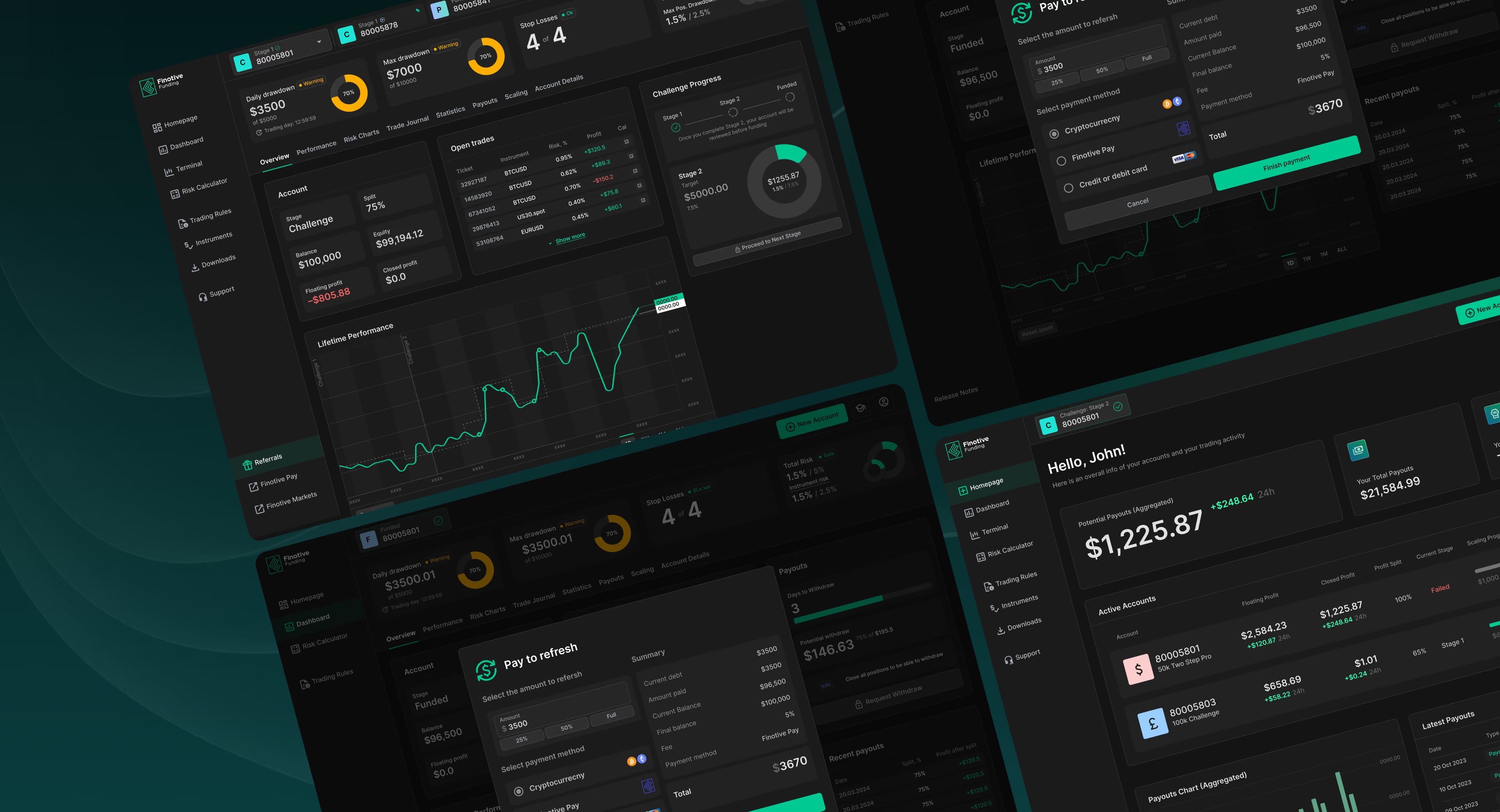
Overview of the Finotive trader dashboard and risk-tool interface.

Context

Finotive Funding is a proprietary trading firm: traders buy an evaluation challenge, pass two stages and trade the firm’s capital with a profit split. As the only product designer, I worked directly with the CTO and CEO. I owned design across the trader dashboard, risk tooling and growth flows, from written specifications to developer handoff.

My role

Sole product designer, working with the CEO and CTO. UX flows, risk tooling, UI, component system, prototyping and developer handoff.

Year

2025

Problem

The platform was shipping features faster than the interface could explain them. The main challenge was rule transparency: funded traders must follow daily and maximum drawdown limits and stop-loss requirements. Breaking a rule can cost them the account. The dashboard needed to make risk visible before a violation, with clear status and warnings.
Dashboard

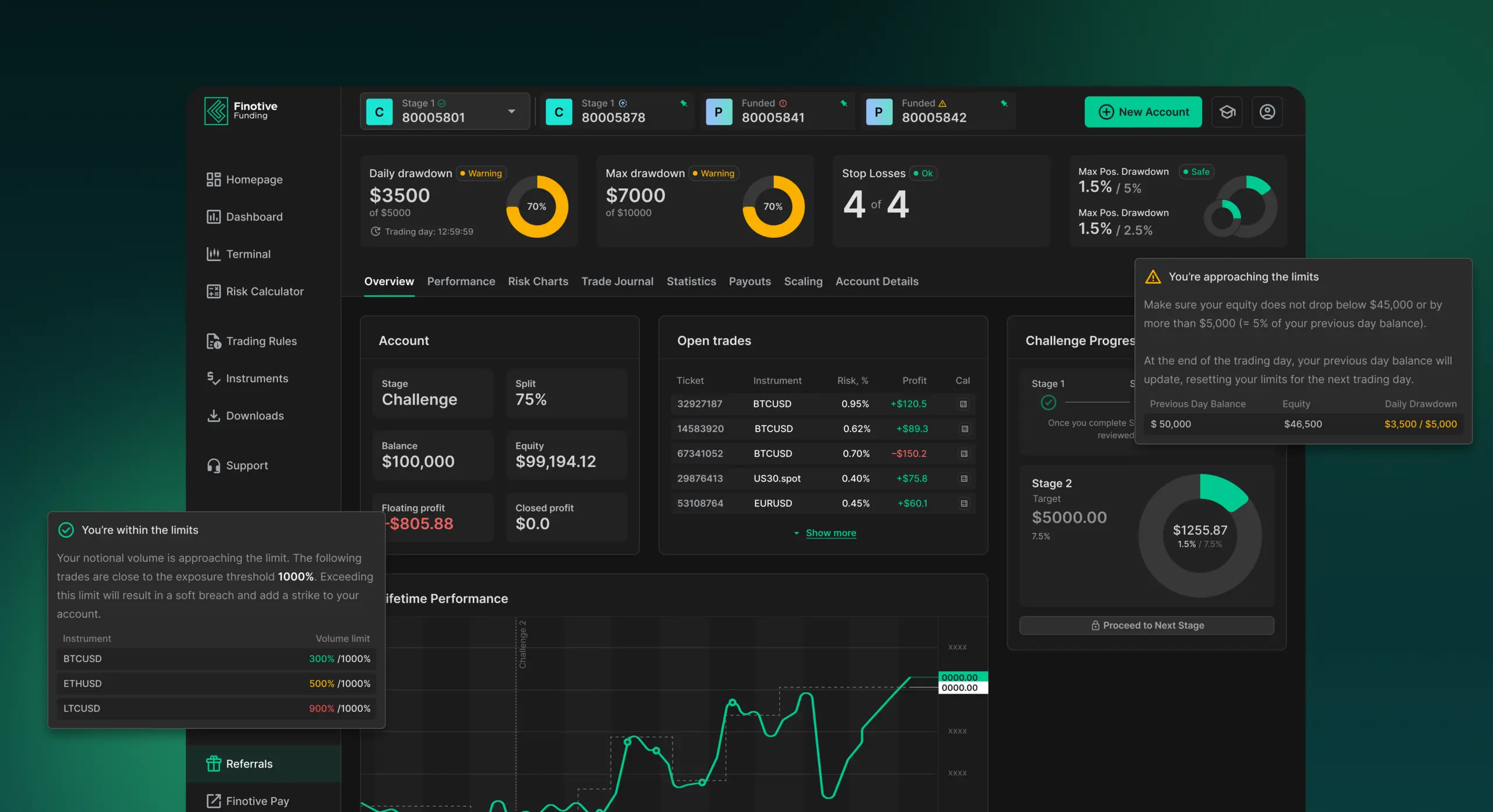
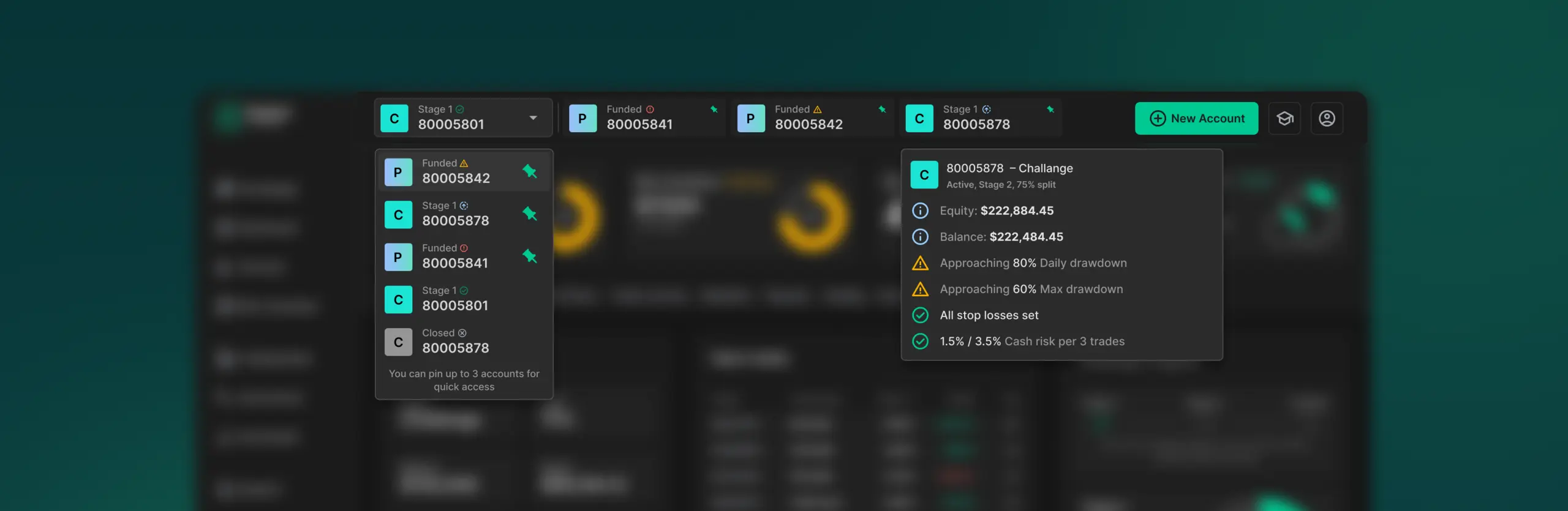
I redesigned the trader dashboard around a persistent risk layer: live drawdown meters, stop-loss status, per-instrument risk and early warnings before violations. I also rebuilt account switching as a pinnable top bar with status tooltips. Pinning, ordering and selection edge cases required several rounds of scenario mapping with the CTO.
Finotive trader dashboard with drawdown limits, account status and risk warnings.
Persistent risk layer: live drawdown meters, stop-loss status and early-warning states surface risk before violations happen — not after.
Finotive account switcher with pinned accounts and status tooltips.
Pinnable account bar with status tooltips. A deceptively simple component: pinning, ordering and selection edge cases took several rounds of scenario mapping to get right

Risk Calculator

The most complex module: a tool for sizing positions against the account's risk budget — placement and distance modes, validation warnings tied to minimum stop-loss rules. The flow went through four major iterations as requirements sharpened; part of my job was keeping each round consistent with the platform's risk logic while the product direction was still moving.
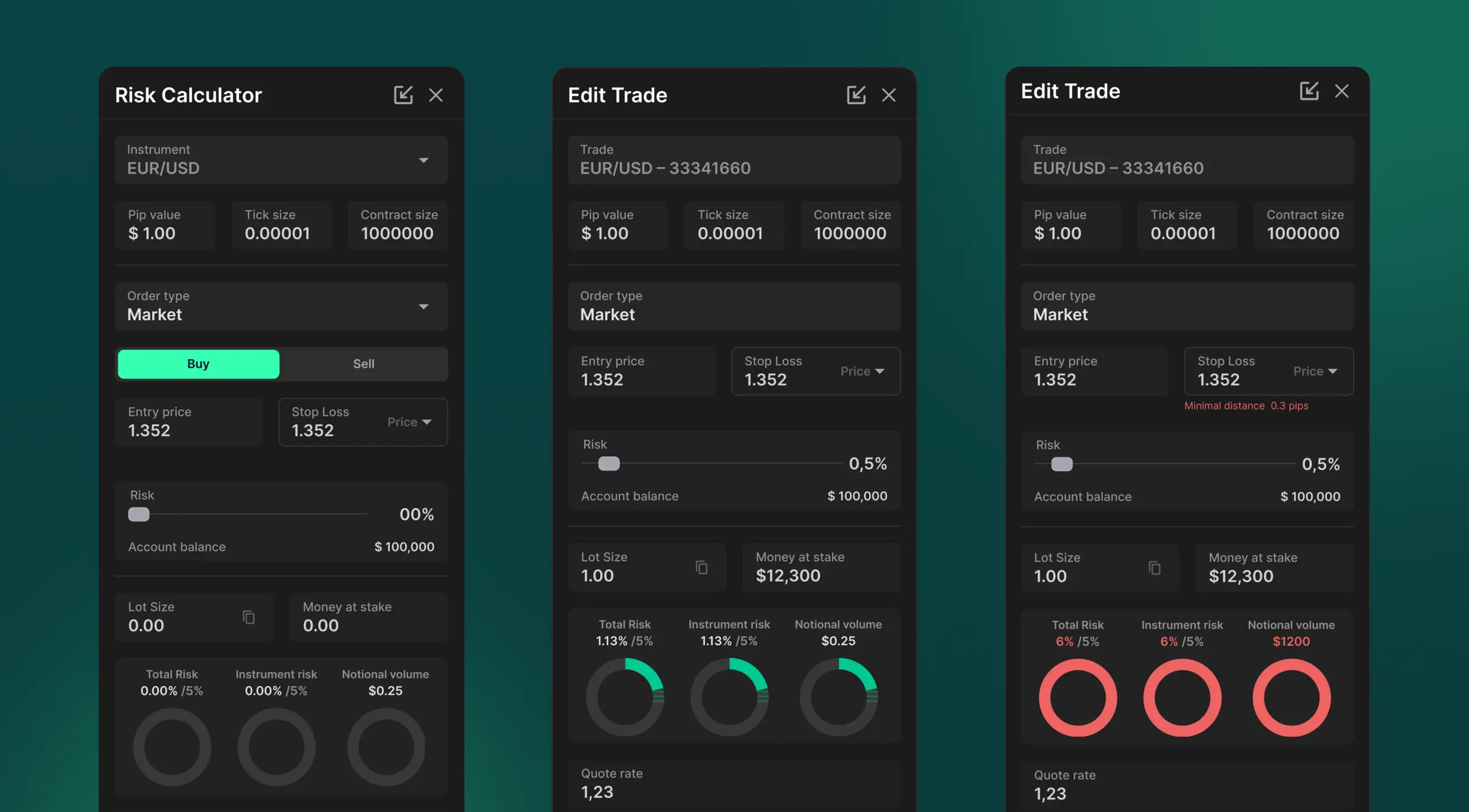
Finotive position-sizing calculator with risk settings and validation states.
Position sizing against the account's risk budget: placement and distance modes, validation warnings tied to minimum stop-loss rules. Four major iterations as product requirements evolved.

Growth & trust flows

I designed the referral flow for both sides of the program: referrers track invitees and reward status, while invited traders see their own progress. The referral landing page introduces the referrer and explains the benefits before sign-up.
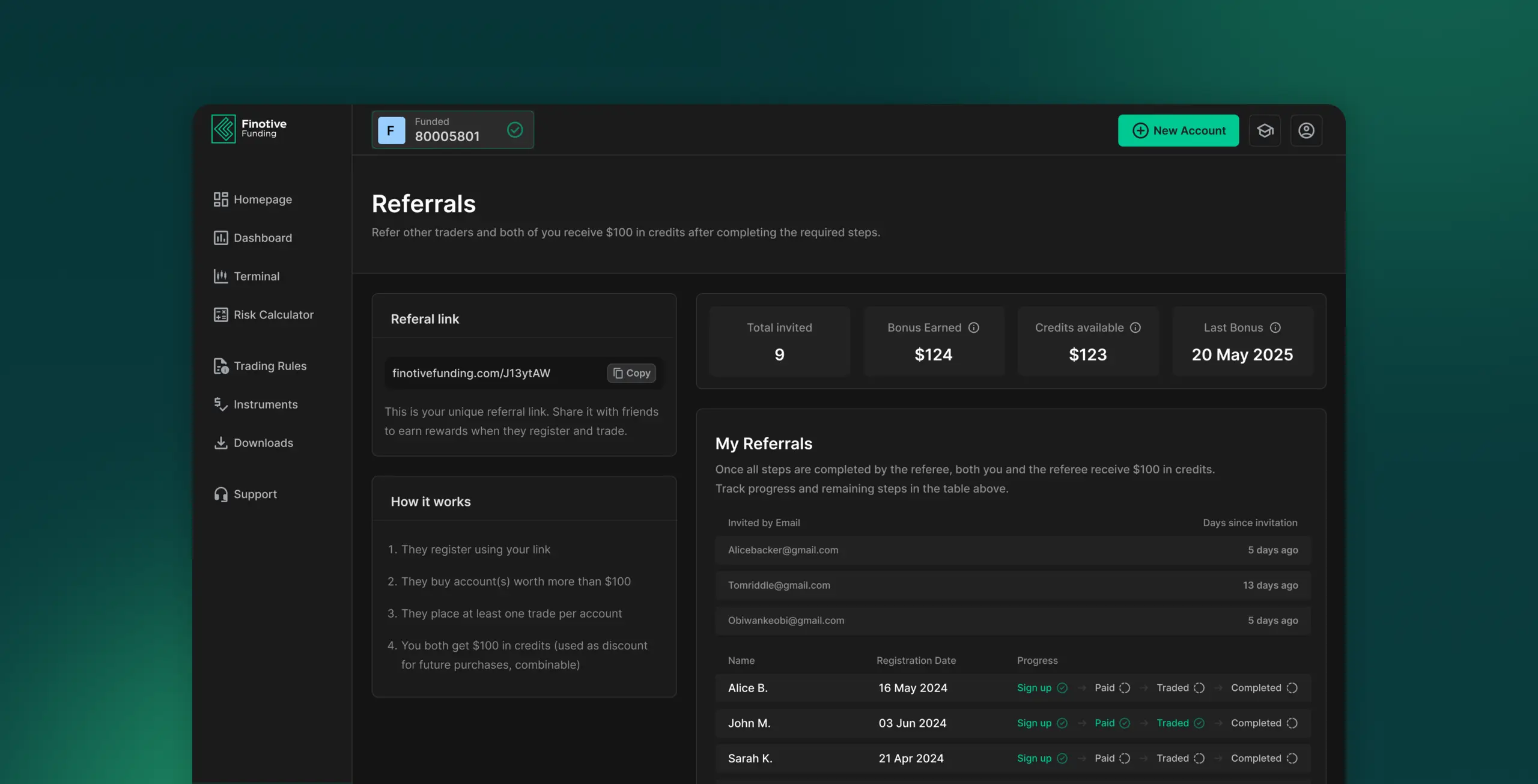

Finotive referral dashboard showing invitees and reward progress.
Two-sided referral tracking: the referrer sees live status of every referee, the referee sees their own progress toward the reward.
Finotive referral landing page introducing the referrer and programme benefits.
Referral landing with named referrer and benefit breakdown — the conversion entry point of the program.

Design system

I inherited a partial library and extended it into a consistent component system. Reusable cards for risk, news and accounts helped me keep the interface consistent while working as the only designer.
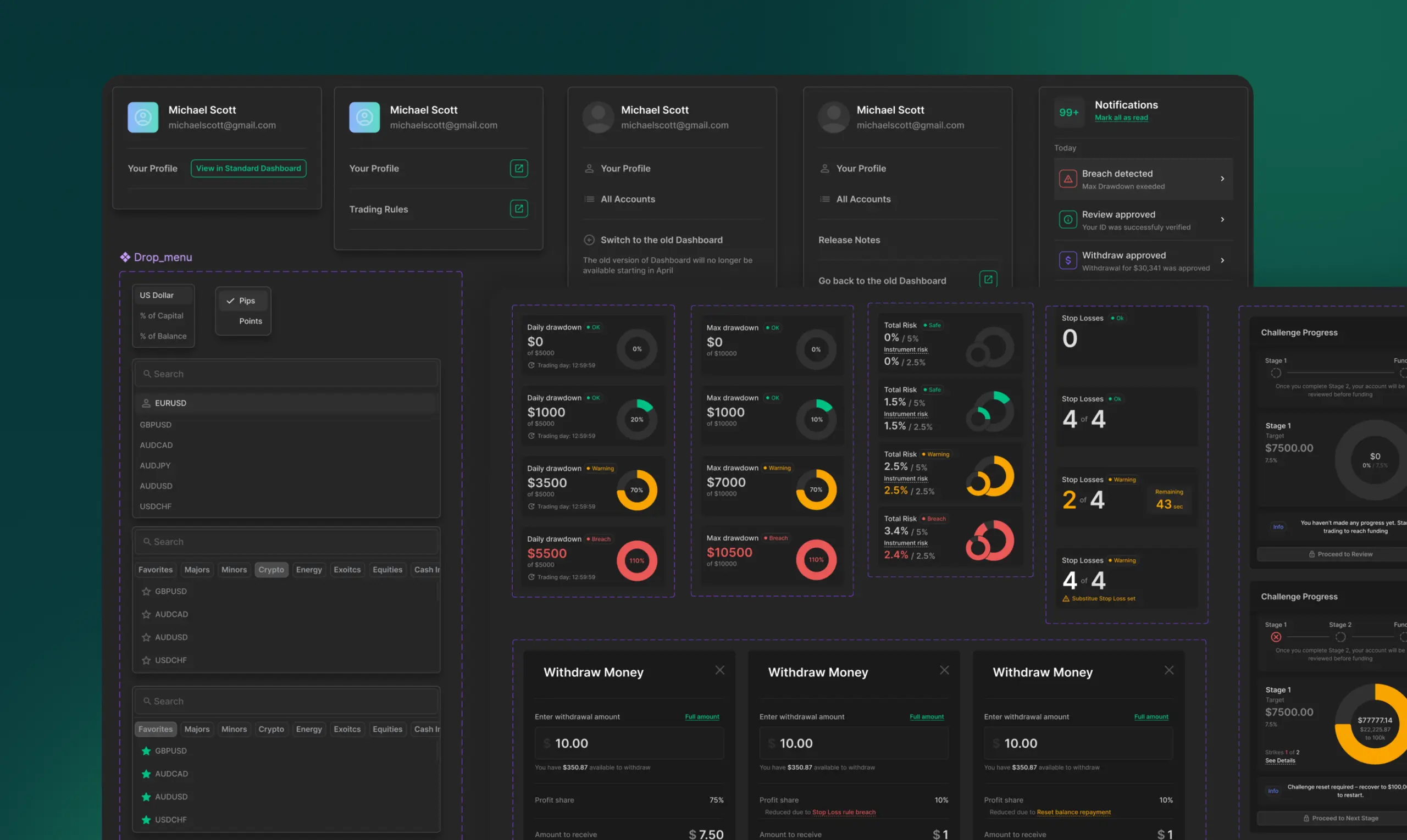
Reusable Finotive interface components for accounts, risk and news.
Card-based component system extended from a partial inherited library. Keeping a one-designer operation fast without visual drift

Outcome

Everything I designed shipped to production; the redesigned platform launched in May 2025. (Finotive has since evolved the design further, shown here is my 2025 work.)
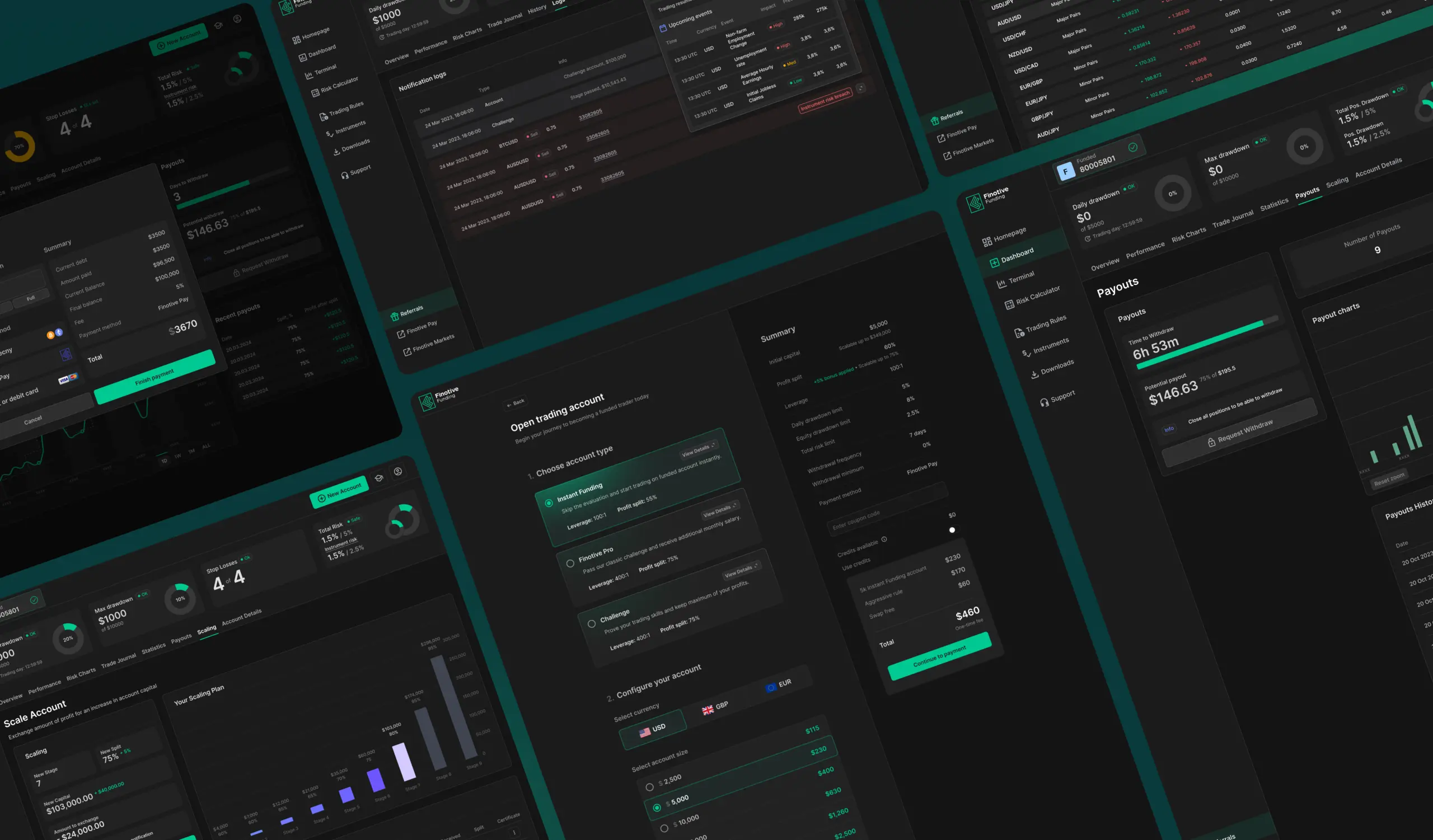
Overview of the final Finotive dashboard interface.
Return to homepage
Read next case study
Open original