

Context
Enum8 gives businesses global accounts that treat bank rails and crypto as one system: multi-currency wallets, crypto addresses, conversions, and transfers over SEPA, SWIFT and Tron. As the sole designer, I designed the agreed product scope and marketing website in three weeks. The product is live; access is account-gated, screens are published with the client's permission.
A complete product scope in three weeks.
I had three weeks to design the agreed product scope and public website, starting without an existing design foundation. This covered information architecture, core flows, their key states and a reusable component system. Consistent patterns helped keep the work manageable as the screens came together.
Choose the account type before the form.
Personal and business accounts need different information at signup. I separated those paths at the entry point, then designed the corresponding forms and validation states. The scope also included passwordless entry via a magic link and password recovery.
Different payment rails. A shared status language.
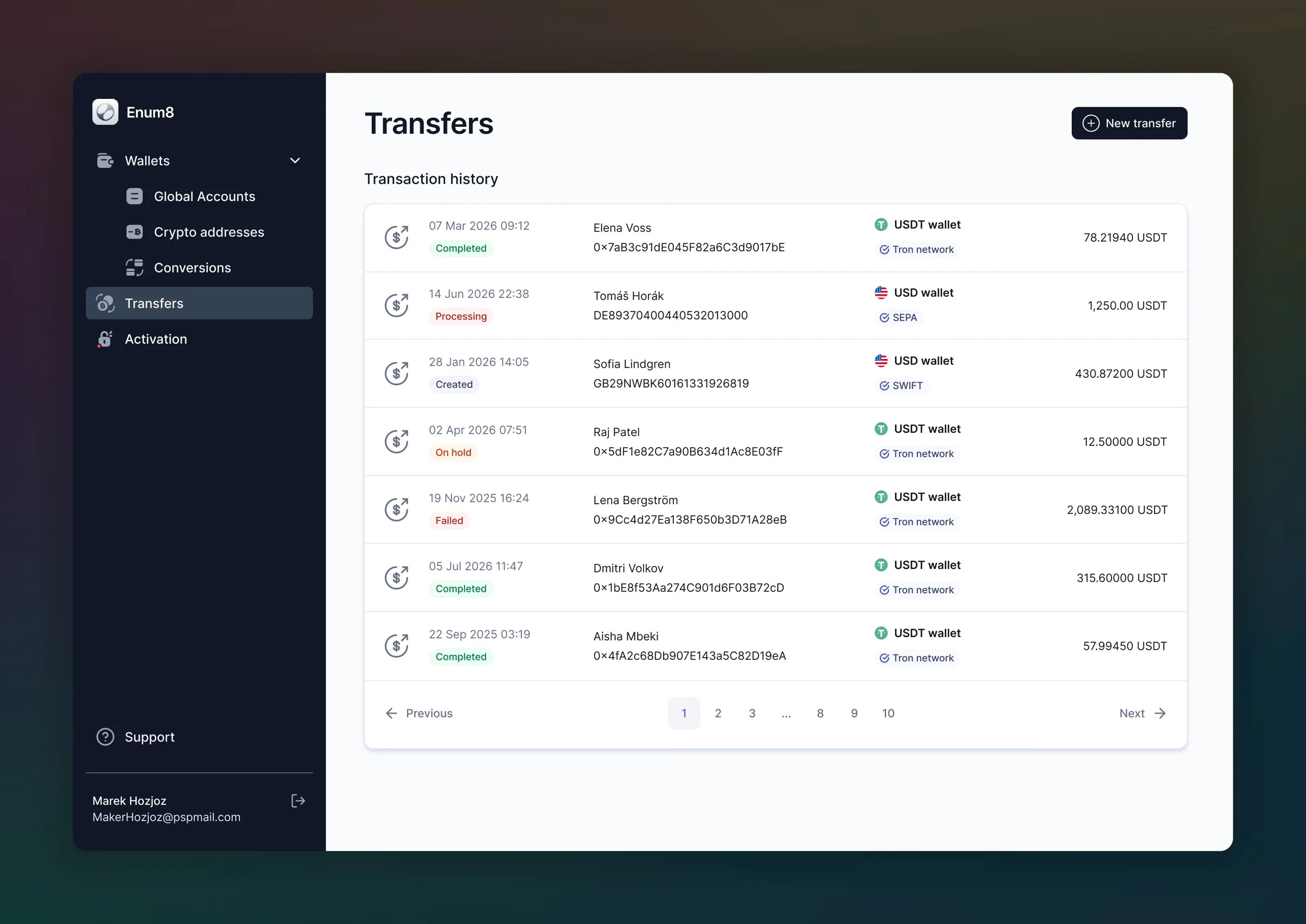
SEPA, SWIFT and USDT transfers on Tron share a transaction history and the same status language: Created, Processing, On hold, Completed and Failed. This gives users a consistent way to follow a transfer while retaining the details of its payment rail.
A consistent overview of fiat and crypto wallets.
The wallet overview brings euros, dollars and USDT together. I used cards with prominent currency marks and balances so users can identify an account and move into its actions. Fiat and crypto wallets share the same layout, helping the home screen present them as parts of one financial workspace.
The same patterns across the product.
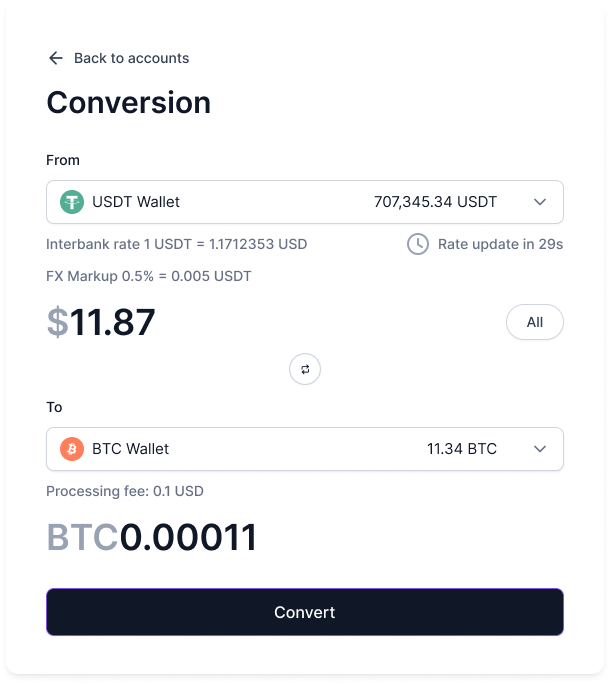
The three decisions above set the system; the rest of the product ran on it. The same three weeks covered crypto address management, fiat-to-crypto conversions, the full transfer creation flow, and profile with security settings, all built from the same components with the same state discipline.
From the product to its public website.
The design was delivered in three weeks: developer-ready Figma with reusable components and documented states, plus the marketing website design. The product and public website are now live.